Introduction
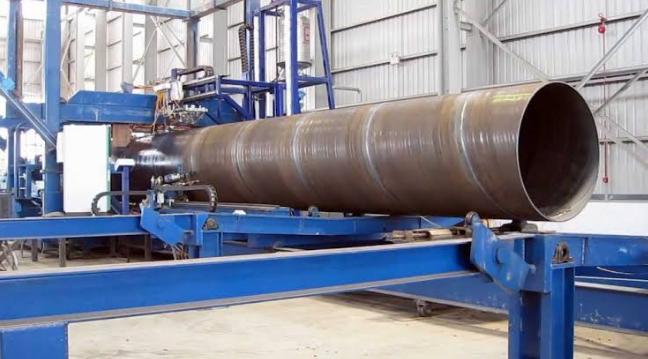
Welding is an important part of many steel pipe manufacturing processes, particularly when individual steel plates or strips are formed and joined to create cylindrical pipe sections. The orientation and position of a weld can affect the manufacturing process, inspection requirements, and suitability of the finished pipe for a particular application.
For engineers, procurement teams, and project managers, understanding terms such as transverse weld can make technical discussions and supplier evaluations easier. The correct welding approach depends on the pipe design, manufacturing method, dimensions, material requirements, and applicable standards.
What Is Weld Orientation?
Weld orientation describes the direction in which a weld runs relative to the pipe or component.
In pipe manufacturing, welds may generally be discussed according to whether they run along the length of the pipe or across its circumference. These orientations have different roles within particular manufacturing and joining processes.
Understanding the orientation helps engineers communicate more precisely about pipe construction and the type of joint being examined.
See also: Formulation Strategies for Plant-Based Functional Ingredients
Longitudinal Welds
A longitudinal weld runs generally parallel to the length of a cylindrical pipe. This type of weld can be used when a flat steel plate or strip is formed into a cylindrical shape and the edges are joined along the pipe’s length.
Longitudinally welded pipe is produced through controlled forming and welding processes. Manufacturing parameters, material properties, weld quality, and inspection procedures all contribute to the reliability of the finished product.
The choice of manufacturing method depends on the requirements of the intended application.
Circumferential or Transverse Joints
A weld running around the circumference of a pipe is oriented differently from a longitudinal weld. Such joints may be encountered when separate pipe sections are joined together or when particular fabrication arrangements require a circumferential connection.
The terminology used can vary depending on the engineering context. Therefore, project specifications should clearly define the intended weld orientation and joint configuration.
Why Weld Orientation Matters
Weld orientation can influence several aspects of pipe fabrication and inspection.
Engineers may need to consider:
- Applied loading
- Joint geometry
- Manufacturing method
- Welding procedure
- Inspection requirements
- Pipe dimensions
- Material grade
- Service conditions
These factors should be evaluated together rather than considering weld direction in isolation.
Manufacturing Considerations
Different welding configurations require different manufacturing controls. Welding parameters need to be selected according to the material, joint design, thickness, and applicable production requirements.
Manufacturers may monitor factors such as heat input, welding speed, alignment, surface preparation, and joint quality.
Consistent process control helps reduce defects and supports repeatable manufacturing results.
Inspection and Quality Control
Inspection is a critical part of welded pipe production. The appropriate inspection methods depend on the product specification, applicable standards, joint type, and project requirements.
Visual examination may be used alongside other testing methods where required. Depending on the application, manufacturers may use non-destructive testing techniques to identify potential imperfections that cannot be detected through visual inspection alone.
Quality records and traceability can also help document the manufacturing history of the pipe.
Material Selection and Welding
The steel grade used for pipe production can influence welding considerations. Different grades and thicknesses may require specific welding procedures and process controls.
Manufacturers should ensure that welding procedures are compatible with the selected material and applicable project standards.
For demanding pipeline projects, material certificates, welding documentation, and inspection records can form an important part of the overall quality package.
Applications of Welded Steel Pipe
Welded steel pipe is used across many industrial sectors. Applications can include water transportation, oil and gas infrastructure, structural projects, industrial facilities, and other engineered systems.
The appropriate pipe design depends on factors such as pressure, temperature, fluid characteristics, dimensions, installation environment, and applicable standards.
A supplier should be evaluated according to the requirements of the specific project rather than simply by pipe availability.
Choosing a Pipe Supplier
When sourcing welded steel pipe, procurement teams should review more than the advertised product description.
Important considerations can include:
- Manufacturing capabilities
- Applicable standards
- Material traceability
- Welding procedures
- Inspection and testing
- Quality documentation
- Production capacity
- Packaging and handling
- Delivery capabilities
- Technical communication
A supplier that can clearly document these areas can make project procurement more organized.
Importance of Technical Documentation
Technical documentation provides useful information for engineers and quality teams. Depending on the project, documentation may include material certificates, inspection reports, dimensional records, welding information, and other quality documents.
Clear documentation can help customers verify that delivered products meet the agreed specifications.
Before placing an order, buyers should establish which documents are required for project acceptance.
FAQs
1. What does weld orientation mean?
Weld orientation describes the direction and position of a weld relative to the pipe or component. Common descriptions include longitudinal and circumferential orientations.
2. Why is weld inspection important?
Inspection helps identify potential imperfections and verifies that the manufactured joint meets applicable quality requirements. The specific inspection method depends on the product and project specification.
3. Does weld orientation affect pipe selection?
It can be relevant because different manufacturing and joining configurations have different technical and inspection considerations. Engineers should select the pipe and joining method according to the project’s design requirements.
Conclusion
Understanding weld orientation is useful when evaluating steel pipe manufacturing and fabrication processes. The direction of a weld is connected to the manufacturing method, joint design, inspection approach, material characteristics, and intended application.
For buyers and project engineers, clear specifications and thorough quality documentation can help ensure that the selected pipe and welding configuration are appropriate for the intended service. A structured supplier evaluation can also support better procurement decisions and consistent project quality.
