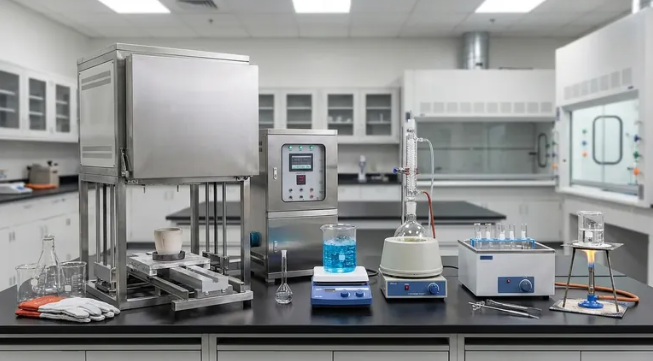
Thermal testing is an important part of research, development, and quality assurance. Products and materials can respond differently when exposed to changing temperatures, making controlled environmental conditions useful for evaluating performance.
For laboratories working with limited space or smaller test samples, desktop thermal chambers can provide a practical testing environment. These systems are designed to bring controlled temperature conditions closer to the laboratory workstation.
Understanding Thermal Testing
Thermal testing involves exposing a sample to controlled temperature conditions and observing its behavior.
Depending on the purpose of the test, researchers may examine physical changes, electrical performance, durability, or other characteristics.
The exact testing procedure should be based on the product and research objective.
See also: Fixing Things Instead of Replacing Them
Why Desktop Equipment Can Be Practical
Large industrial chambers may be unnecessary when researchers are working with small components.
Desktop equipment can provide controlled testing capabilities while occupying a more manageable amount of laboratory space.
This can make it easier to integrate environmental testing into research areas where several instruments must share the same workspace.
Applications for Small Components
Electronics, sensors, materials, and other compact products can often be evaluated using appropriately sized laboratory equipment.
Engineers may use thermal testing during prototype development to observe how components behave under different temperature conditions.
Research teams can also use controlled testing when comparing materials or investigating product performance.
Temperature Range
The required temperature range should be one of the first specifications reviewed.
Researchers should determine the actual minimum and maximum conditions required by their testing procedures.
It is also important to consider temperature stability and uniformity. A chamber that can reach a particular temperature but cannot maintain appropriate conditions may not meet the needs of a specific application.
Internal Working Volume
Desktop equipment comes in different sizes.
The correct internal volume depends on the dimensions and quantity of samples being tested. Users should also consider racks, fixtures, cables, sensors, and other equipment that may be placed inside.
Choosing the smallest possible chamber is not always the best approach if it restricts the test setup.
Laboratory Workflow
The position of a thermal chamber can influence laboratory efficiency.
Equipment should be placed where technicians can safely load samples and access controls. There should also be enough room for maintenance.
When the chamber is integrated into an existing workflow, researchers can move more efficiently between sample preparation, testing, and analysis.
Control and Monitoring
Modern testing requires reliable control of environmental conditions.
Users should evaluate how temperature is programmed, monitored, and maintained. Depending on the application, the ability to create repeatable test profiles may also be important.
Clear controls can make routine testing easier for laboratory staff.
Maintenance and Cleaning
Regular maintenance helps keep equipment in suitable working condition.
Laboratories should establish procedures for cleaning the chamber and inspecting components according to the manufacturer’s recommendations.
The maintenance schedule should be recorded so that routine tasks are not overlooked.
Choosing Equipment for Future Projects
Equipment purchased for one project may eventually be used for other applications.
For this reason, laboratories should consider whether the chamber’s specifications will support likely future research.
However, future requirements should be realistic. Purchasing equipment that is much larger or more complex than necessary can increase cost and consume valuable workspace.
A laboratory researching LIB industry desktop thermal chambers can review the available specifications and compare them with current and anticipated testing requirements.
Safety and Sample Compatibility
Not every material is appropriate for every environmental chamber.
Researchers should verify sample compatibility and operating limitations before beginning a test.
The manufacturer’s instructions should be followed regarding temperature limits, sample loading, cleaning, and other operating procedures.
Benefits for Research and Development
Controlled thermal testing can help engineering teams gather useful information during product development.
Testing under different conditions may reveal behavior that is not obvious during normal laboratory operation.
These findings can contribute to design evaluation and help teams investigate potential issues before products move to later stages.
Frequently Asked Questions
1. What are desktop thermal chambers used for?
They are used to create controlled temperature environments for testing smaller products, components, and materials in laboratory settings.
2. How do I choose the correct chamber size?
Consider the dimensions and number of samples, internal fixtures, and the amount of working space required for the test procedure.
3. What should be checked besides temperature range?
Temperature stability, uniformity, internal volume, controls, maintenance, installation conditions, and sample compatibility should also be considered.
Conclusion
Efficient thermal testing requires more than simply exposing a product to a selected temperature. Laboratories need appropriate equipment, consistent procedures, careful monitoring, and proper maintenance.
Desktop solutions can be practical for smaller samples and space-conscious laboratories. By evaluating technical specifications alongside workflow and future requirements, research teams can establish a testing environment that supports reliable product development
